

The Edwardian era (1901 – 1914) the last era named for a British monarch. It was also known in Europe as the Belle Epoque, or the Gilded Age in the United States.
After heavy and formal Victorian era fashions, Edwardian fashion was lighter and softer, with an S-shaped columnar silhouette courtesy of specifically shaped corsets. Lingerie dresses became popular. Made with lightweight cotton or linen and embellished with loads of frills and lace, these dresses were light and delicate and feminine. Necklines on evening wear were deeper as well.
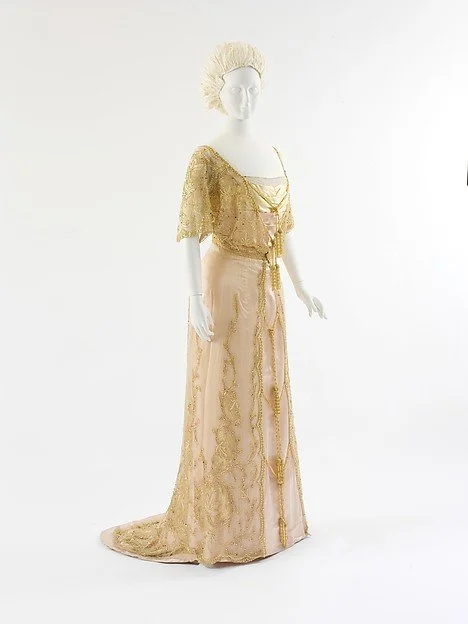
G & E Spitzer (Austrian). Evening dress, 1910-12. Silk, pearl, glass. New York: The Metropolitan Museum of Art, 2003.46. Purchase, Irene Lewisohn Bequest, 2003. Source: The Metropolitan Museum of Art
During the Edwardian period, handcrafted jewelry regained popularity over the machine-made jewelry popular with the Victorians. Edwardian jewelry features garland, ribbon, bow, and wreath motifs matching with the lace and frills on the dresses.
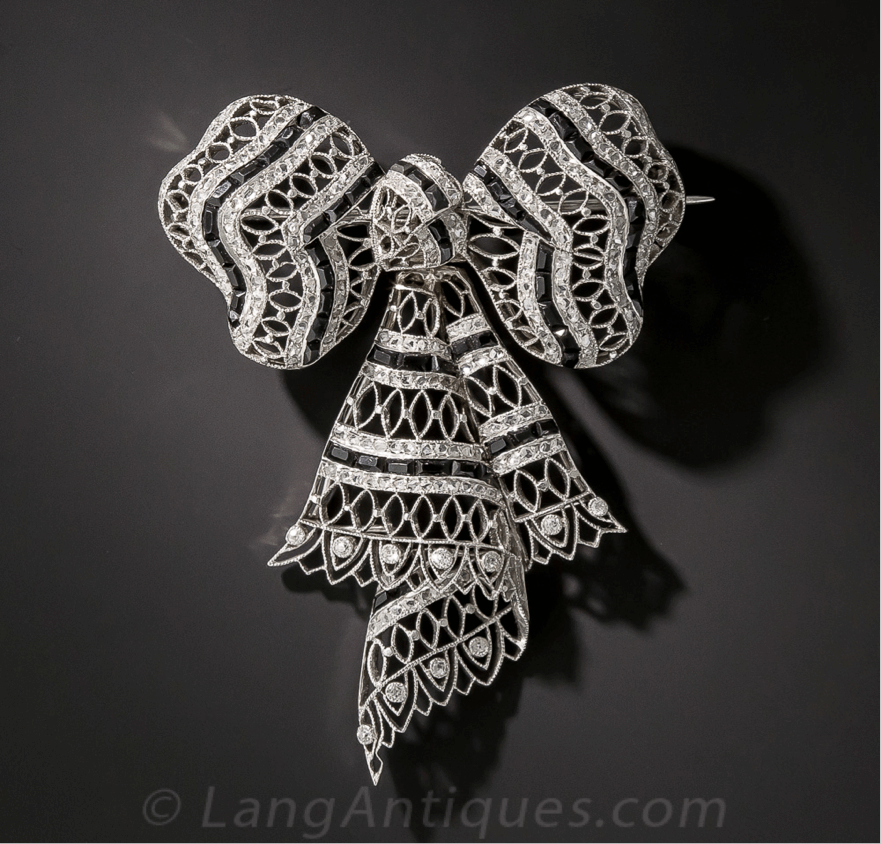
Photograph by Cole Bybee. Image courtesy of Lang Antique and Estate Jewelry, 2025
Popular gemstones were clear, white, or pastel coloured to match with the dresses of the period. Paste glass was very common, and made for convincing “gems” in more affordable jewelry. Fine jewelry included pearls and diamonds. King Edward and Queen Alexandra preferred jewelry with amethyst & peridot, often paired with pearls or diamonds.
With the availability of oxyacetylene torches, jewelers were now able to work with platinum, a strong metal perfect for creating fine, intricate and delicate designs. Designs were often openwork to create an airy, light look. Another popular technique was millegrain, applying a texture like tiny beads or ridges to the edging around a design or around gemstone settings. This technique was incredibly common in Edwardian jewelry.
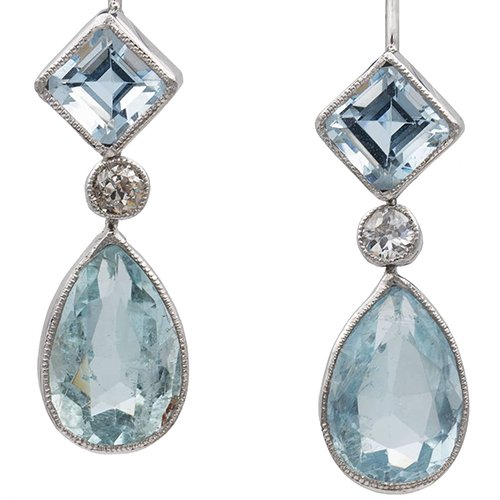
Image courtesy The British Antique Dealers' Association, 2025 (https://www.bada.org/features/terms-trade-millegrain)
With the lower necklines, several styles of necklaces gained in popularity. Festoon necklaces featured swag-shaped elements, often in tiered designs of fine chain with gemstones at the joins. With Edwardian lavalière necklaces, the pendant usually included lacy bow and ribbon motifs, millegraining, and pale gems in style at the time. A Négligée necklace is a longer necklace that usually ends below the collar bone witha pair of different-length drops hanging from a central element. In the Edwardian version the drops were dainty and feminine. Sautoir necklaces of the time often had a tassel or pendant; these necklaces typically reached the waistline or below.

Edwardian pearl, diamond and aquamarine lavalière necklace. Image courtesy of Lang Antique and Estate Jewelry, 2025.
I had a lot of fun diving into the research for this article, and I hope you’ve enjoyed it too! It has certainly sparked a lot of design ideas that I’m looking forward to exploring.
To get a closer look at some Edwardian-age fashion and jewelry, join us at the Ottawa School of Theatre’s Anne of Green Gables fundraiser on Saturday, April 12th a the Shenkman Arts Centre!